
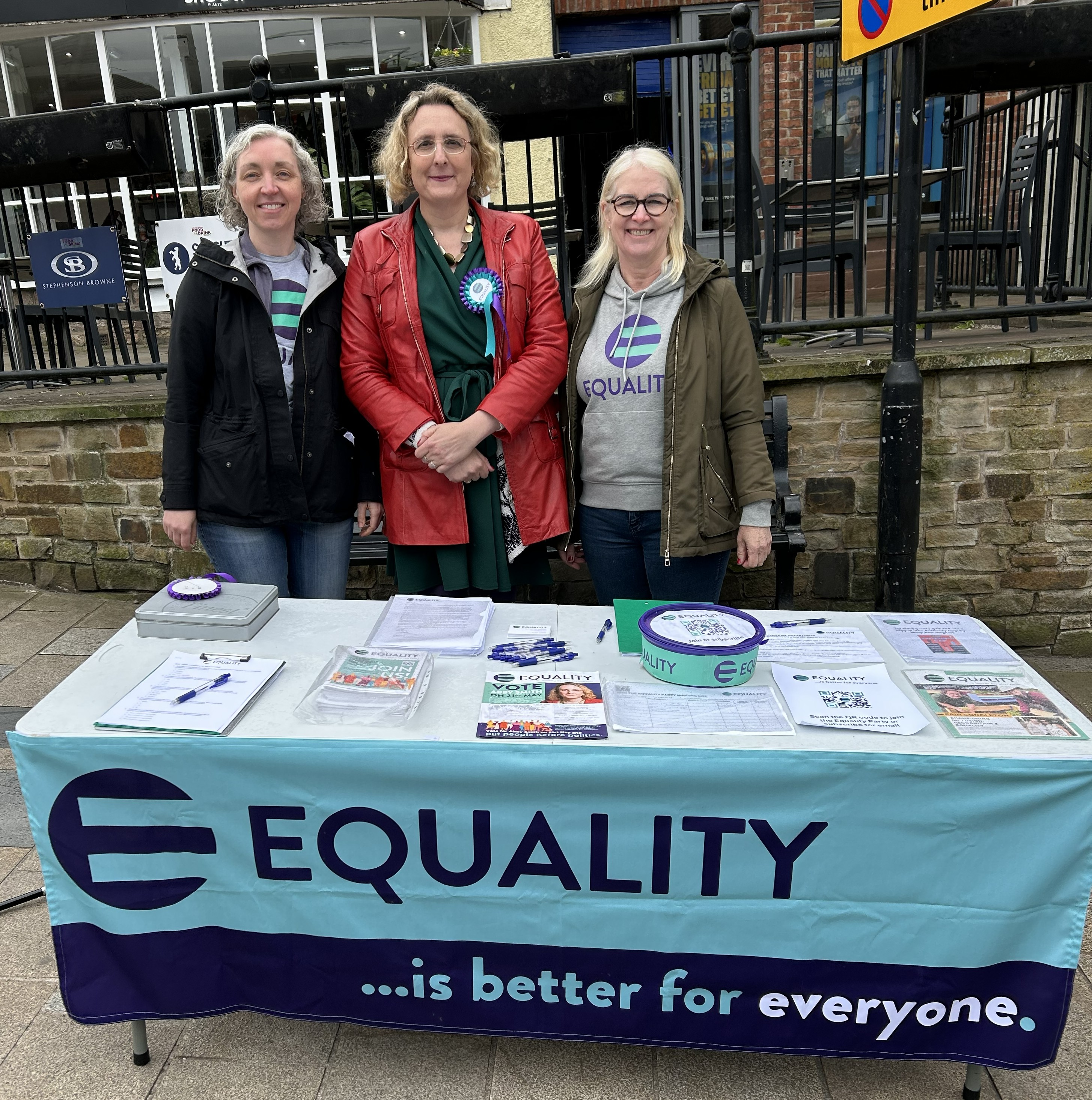
Many thanks to everyone to did the quiz on our street stall. Here are the answers!
1. According to the World Economic Forum, how long will it take before we have gender equality worldwide, at today’s rate of change?
- 10 years
- 25 years
- 50 years
- More than 100 years
Answer: d. 123 years
2. According to the 2021 Census, approximately what percentage of people in England and Wales identified as belonging to an ethnic minority group (excluding White minorities)?
a. 8%
b. 12%
c. 18%
d. 26%
Answer: c. 18% The Office for National Statistics reported around 18% of the population identified with Asian, Black, Mixed or other ethnic minority
3. From the WEF Global Gender Gap report 2026, which measures economic, political, educational and health indicators, what are the life-chances of a girl born in the UK today compared to a boy?
- Equal – 100%
- 90-100%
- 80-90%
- 70-80%
Answer: c. 83%
4.The UK parliamentary elections are on a first-past-the-post system. How many other European democracies use this system to elect their governments?
- None
- 2
- 10
- 20
Answer a: None. In fact the UK, the US, Canada and India are the only major democracies that still use FPTP (and only 30 in total around the world, mostly ex-British colonies)
5. What was the UK disability employment gap in 2025 (the difference between the % employment levels for disabled people compared to non-disabled people)?
a. About 10 percentage points
b. About 20 percentage points
c. About 30 percentage points
d. About 45 percentage points
Answer: c. About 30 percentage points. The UK government reported a disability employment gap of 29.7 percentage points in 2025.
6. Which country became the first in the world to allow people to self-identify their legal gender without medical approval?
a. Sweden
b. Argentina
c. Canada
d. New Zealand
Answer: b. Argentina. Argentina’s 2012 Gender Identity Law became internationally famous for allowing legal gender recognition through self-declaration.
7. Companies with the most gender-balanced executive teams are estimated to outperform companies with the fewest women executives by roughly how much in profitability?
a. 5%
b. 15%
c. 25%
d. 40%
Answer: c. 25%. McKinsey found companies in the top quartile for gender diversity on executive teams were about 25% more likely to have above-average profitability.
8. What was the largest religious group in the UK in the 2021 Census?
a. Christianity
b. Islam
c. No religion
d. Hinduism
Answer: a. Christianity remained the largest group, although it fell below 50% in England and Wales for the first time. “No religion” was the second largest category.
9. Roughly how many people aged 16–24 in the UK identified as lesbian, gay or bisexual in 2023?
a. 1 in 25
b. 1 in 12
c. 1 in 10
d. 1 in 4
Answer: c. 1 in 10. ONS data showed 10.4% of 16–24 year olds identified as LGB in 2023.
10. Which country was the first in the world to elect a national parliament with more than 50% women MPs?
a. Sweden
b. Iceland
c. Rwanda
d. New Zealand
Answer: c. Rwanda. Rwanda became the first country with a female-majority parliament and still has one of the world’s highest proportions of women legislators

